TPO vs EPDM: Best Flat Roof for Ohio?
The two flat-roof membranes, compared honestly.
We install both TPO and EPDM on flat and low-slope roofs across Northwest Ohio, so we have no reason to push you one way or the other. Here is the straight comparison for a building out here: cost, lifespan, how each handles our winters and summers, energy savings, and repairs.
Call (419) 799-7778Last updated: July 17, 2026
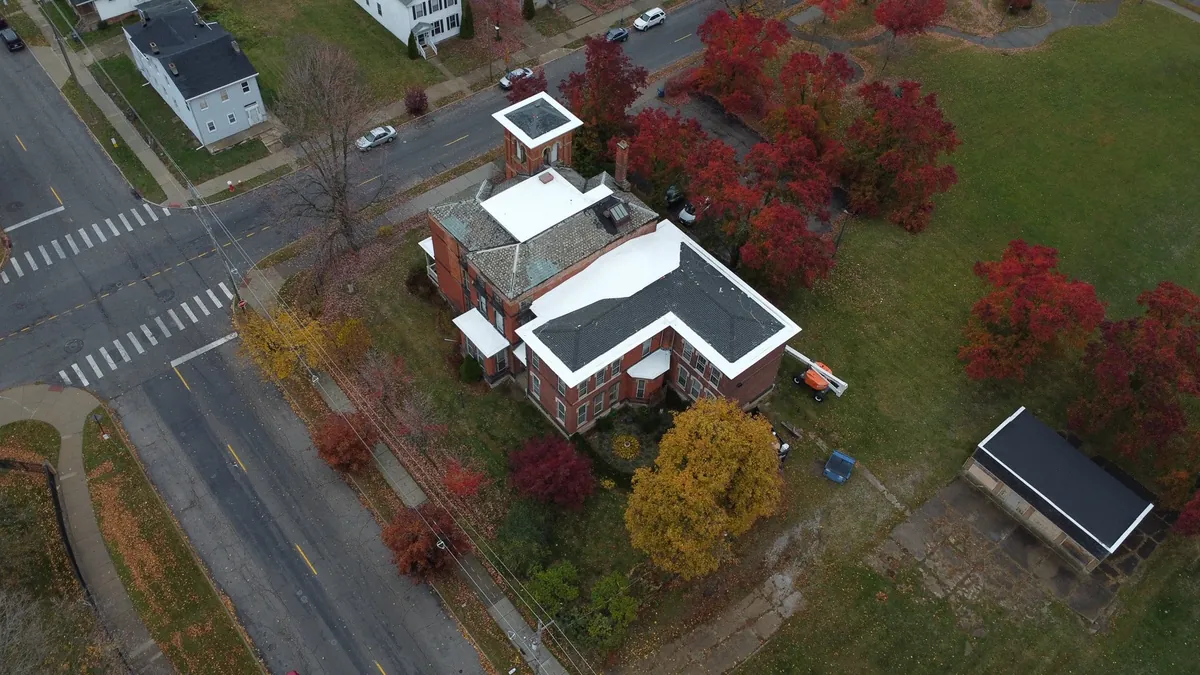
Both are proven single-ply membranes for flat and low-slope roofs. TPO is a white, reflective membrane with heat-welded seams that keeps a building cooler in summer, so it fits offices, retail, and anything you cool hard. EPDM is a black rubber membrane that stays flexible in deep cold and has the longest track record in the business, so it fits warehouses, shops, and buildings where summer cooling is not the priority. The right pick depends on your building and how you use it.
The short version.
Pick TPO if your building runs hot in summer and you air-condition it hard, you want a clean white roof that reflects the sun, or you like that its seams are welded into one continuous sheet. It is the membrane most new commercial roofs in the area go with.
Pick EPDM if you want the longest proven track record, your building is a warehouse or shop where summer cooling is not the main concern, or you value a rubber that stays flexible through a hard Ohio freeze. It has been keeping buildings dry for decades and it is easy to repair.
There is no universally "better" flat roof. There is a better membrane for your building, your budget, and how you use the space. That is what a free inspection sorts out.
Cost: closer than most people think.
Unlike shingle versus metal, where the price gap is wide, TPO and EPDM land close together on material cost. On most jobs the bigger cost drivers are the size and shape of the roof, how much old roofing has to come off, the insulation you build under the membrane, and how it is attached. The membrane choice is rarely what makes one quote much higher than the other.
Because the two are close on price, the smarter question is not "which is cheaper" but "which fits the building." A white TPO roof that lowers your summer cooling bill can pay for itself over time on a building you cool heavily. On a building you barely cool, that saving is small and EPDM's long track record may matter more. We quote per roof after we see it, and we will tell you which way the numbers point for your building. For the wider picture on roofing costs out here, see our NW Ohio roof cost guide.
How each holds up to Ohio weather.
This is where the decision gets real, because Northwest Ohio is hard on flat roofs. Standing water, heavy wet snow, deep winter cold, and strong summer sun all work on the same membrane in one year.
Winter cold
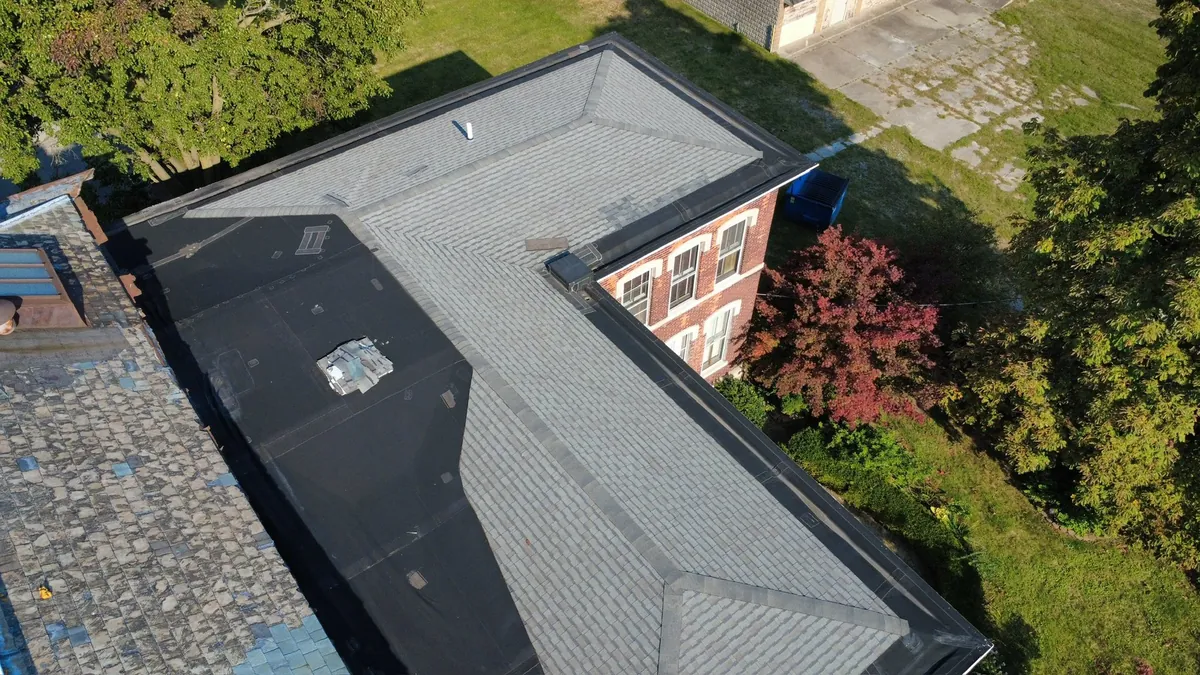
EPDM has the edge here. Rubber stays flexible in deep cold, so it takes our freeze-thaw cycle in stride without getting brittle. Being black, it also absorbs heat and can shed a light snow a little faster. TPO handles cold fine too, but the coldest months are where EPDM's flexibility shows.
Summer sun and heat
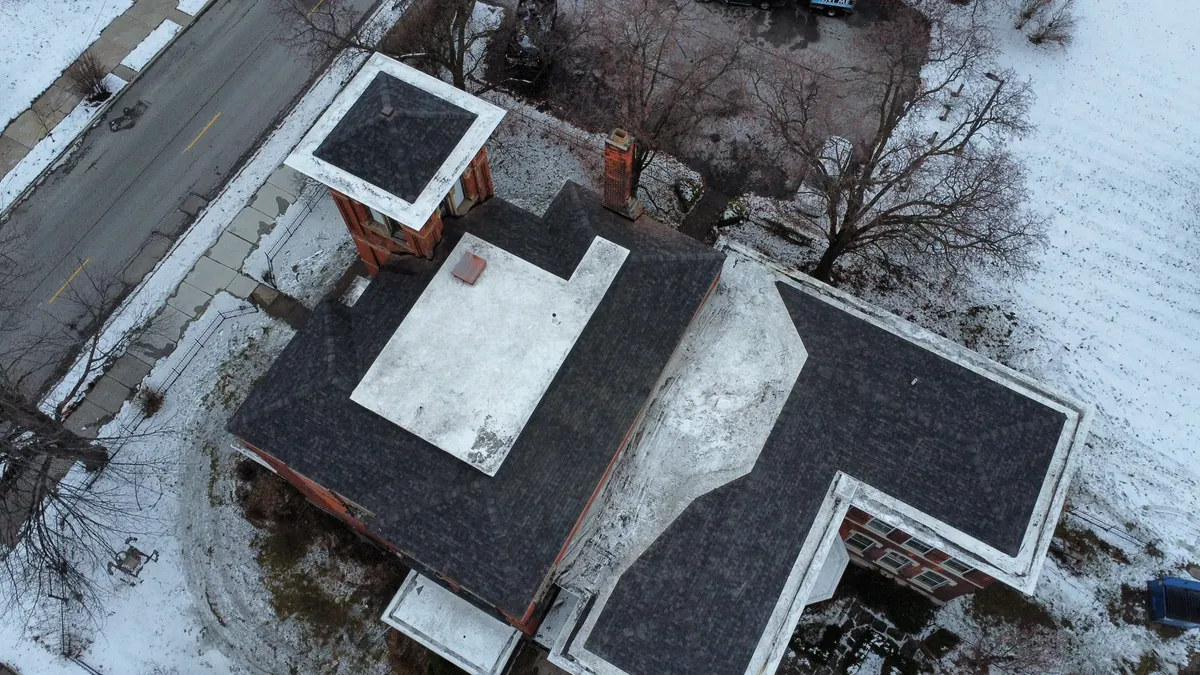
TPO wins here. A white reflective membrane bounces the summer sun instead of soaking it up, which keeps the roof and the space below it cooler and eases the load on your cooling system. A black EPDM roof runs hotter in July, which is fine structurally but does nothing for your cooling bill.
Ponding water and seams
Flat roofs live and die at the seams and the flashings, no matter the membrane. TPO seams are hot-air welded into one continuous sheet, which many roofers consider a strong point. EPDM seams are bonded with tape or adhesive and, done right, hold for decades. On both, standing water finds any weak seam, so proper slope, drains, and a clean install matter more than the material name.
Side by side.
- Material: TPO thermoplastic, EPDM synthetic rubber
- Color: TPO usually white and reflective, EPDM usually black
- Seams: TPO hot-air welded, EPDM taped or glued
- Summer heat: TPO reflects it, EPDM absorbs it
- Winter cold: EPDM very flexible, TPO good
- Track record: EPDM decades long, TPO newer but proven
- Lifespan: both roughly 20 to 30 years installed well
- Best fit: TPO for cooled buildings and new commercial, EPDM for warehouses, shops, and cold-first buildings
Not sure which fits your building?
Free inspection and honest advice for property owners in Napoleon and NW Ohio. We install both.
Two things building owners always ask about.
Which one saves more on energy?
TPO, in summer. A white reflective roof lowers the heat load on a building you air-condition, which shows up on the cooling bill during our hot months. In winter that reflectivity does little, and neither membrane replaces good insulation under it. If your building runs hot and you cool it hard, TPO's summer savings are real. If you barely cool the space, the saving is small and it should not drive the decision by itself.
What happens when it leaks?
Most flat-roof leaks are repairable on both systems, and they almost always start at a seam or a flashing rather than in the open membrane. On EPDM we patch or reseal; on TPO we weld in new membrane. Full replacement only makes sense when the membrane is near the end of its life or the damage is widespread. Either way, we can handle the repair and, if a storm caused it, help you file the insurance claim.
TPO vs EPDM: common questions.
Both are proven single-ply membranes that hold up well on Northwest Ohio buildings, and the right one depends on the building. TPO is a white, reflective membrane with heat-welded seams that keeps a building cooler in summer, so it fits offices, retail, and anything you cool hard in July. EPDM is a black rubber membrane that stays flexible in deep cold and has one of the longest track records in the business, so it fits warehouses, shops, and buildings where summer cooling is not the priority.
TPO is a thermoplastic membrane, usually white, and its seams are hot-air welded into one continuous sheet. EPDM is a synthetic rubber membrane, usually black, and its seams are bonded with tape or adhesive. TPO reflects heat and saves on summer cooling; EPDM absorbs heat and is extremely flexible in cold. Both are single-ply systems built for flat and low-slope roofs.
In our climate, a well-installed TPO or EPDM roof lasts roughly 20 to 30 years. EPDM has the longer real-world track record because it has been on buildings for decades. TPO is newer, and modern formulations have improved a lot. With either one, the seams and the flashings are what fail first, so installation quality and yearly upkeep matter more than the material name.
It can be. A white TPO roof reflects summer sun and cuts cooling costs, which matters most on buildings you air-condition heavily. In winter that reflectivity does little for you, and a black EPDM roof will actually shed a light snow faster because it absorbs heat. If your building runs hot in summer, TPO usually pays off. If it does not, the summer savings are smaller and EPDM becomes more attractive.
Most leaks on both systems are repairable. On EPDM the fix is usually a patch or reseal at a seam or flashing; on TPO it is a hot-air weld of new membrane over the failure. Full replacement only makes sense when the membrane is near the end of its life or damage is widespread. We inspect the roof, tell you which situation you are in, and never sell a tear-off you do not need.
Get an honest recommendation.
We come out, look at your building, and tell you which flat roof actually makes sense for it. No pressure, no sales pitch.