
Best Gutter Guards for Ohio Homes
Micro-mesh, reverse curve, screens, and foam, judged on leaves, pine needles, and winter.
Gutters in Northwest Ohio fill up from three directions: maple helicopters in May, oak and maple leaves in October and November, and pine needles all year long. The right gutter guard depends on which of those land on your roof, how much water the roof sheds in a hard storm, and how the guard holds up under a winter of wet snow and ice. This guide covers how each type performs here, what guards cost, and when they are not worth buying.
Call (419) 799-7778Last updated: October 26, 2026
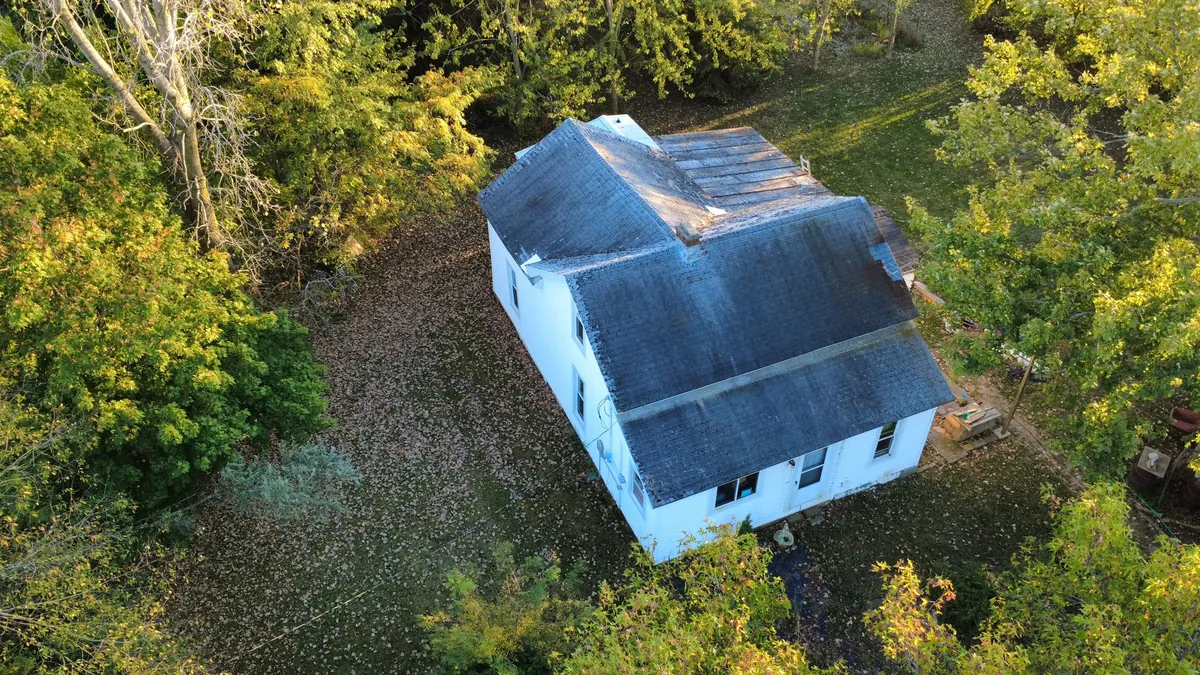
For most Northwest Ohio homes with trees nearby, stainless steel micro-mesh is the best gutter guard. It keeps out maple helicopters, oak leaves, pine needles, and shingle granules while letting water through. Reverse-curve hoods work on homes with lighter leaf loads, and foam and brush inserts do not hold up here. Guards usually add about $6 to $10 per foot on top of the gutters, depending on the system.
What Northwest Ohio trees put in your gutters.
A gutter guard is a filter, and a filter has to be matched to what it is filtering. Around Napoleon, Defiance, and the rest of the area, gutters collect a few distinct kinds of debris through the year:
- Maple helicopters in May: the winged seeds come down by the thousands in a few weeks. They are small enough to slip through coarse screens and they pack together once wet.
- Leaves in October and November: maples and oaks drop most of the volume. Big flat leaves are the easiest debris to keep out, but there is a lot of it in a short window.
- Pine needles all year: thin and stiff, they fall point-first and work their way through any opening wider than they are.
- Shingle granules: the sand-like grit that washes off asphalt shingles, more of it as a roof ages. It settles in the bottom of the gutter like silt.
A house with a single maple in the front yard has a different problem than a farmhouse sitting in a windbreak of pines, or a brick home on one of the older streets in Toledo where big maples and oaks hang over the roof. The best guard for one is not always the best for the others.
The main types of gutter guards, compared.
Most guards sold for homes fall into four groups. Here is how each one handles the debris above.
Micro-mesh
A fine stainless steel mesh stretched over an aluminum frame that covers the top of the gutter. Water passes through the mesh, and debris sits on top, dries out, and blows off. It keeps out maple helicopters, oak leaves, pine needles, and shingle granules, which covers almost everything Northwest Ohio trees drop. This is what we put on most of our jobs and what we recommend for homes with trees close by.
The tradeoff is that the openings are small. Pollen in spring and fine roof grit can leave a film on the mesh over time that slows how fast water gets through, and under heavy trees wet leaves can mat on top for a while before they dry out. A soft brush on an extension pole clears it.
Reverse curve
A solid hood covers the gutter, and water follows the rounded front edge down into a slot using surface tension, while leaves slide off the front. They work, but in a heavy summer downpour water can run fast enough to overshoot the curve and go over the edge instead of into the slot. They also depend on the gutter pitch being right. Reverse curve is a good fit for homes without huge leaf loads.
Screens and perforated covers
Snap-in or lay-in covers made of plastic or aluminum with holes or a coarse grid. They are the cheapest option and they stop large leaves well. Smaller debris is where they fall short: maple helicopters, seeds, and pine needles can get through the holes or wedge in them, and the gutter still fills with sludge underneath. Plastic versions also get brittle after years of summer sun and winter cold.
Foam and brush inserts
Foam blocks and bottle-brush style inserts sit inside the gutter itself. We do not sell these. Foam holds moisture and breaks down, and a gutter full of soaked foam in December is a gutter full of ice. Brush inserts trap small debris between the bristles and turn into a mess within a year or two. If you already have either kind, pulling them out and starting over is usually the right call.
The best gutter guard for pine needles.
Pine needles are the hardest test for a gutter guard. They fall year-round instead of in one season, they are narrow enough to drop through most screens, and they knit together into a mat once they get wet.
Each type handles them differently. Screens with large holes let needles in point-first, so the gutter fills anyway and the screen makes it harder to clean. Brush inserts catch needles between the bristles and hold them there. Reverse-curve hoods can pull needles into the slot along with the water. Micro-mesh is the one type with openings too small for a needle to fall through, so the needles stay on top where wind and rain move them off.
If your house sits under or next to pines, plan on micro-mesh and on checking the top of the guards once or twice a year, especially after a wet stretch. Without guards, homes with mature oaks or pines close to the house usually need their gutters cleaned three or four times a year.
Want to know which guard fits your house?
Free estimates on gutters and gutter guards for homeowners in Napoleon and across NW Ohio. Seamless aluminum cut on site.
Gutter guards and Ohio winters.
Many gutter guard reviews test with water from a hose and a pile of leaves. In Northwest Ohio, the harder test is February, when the gutter is holding wet snow and ice for weeks at a time.
Guards do not stop ice dams
Ice dams form when heat from the house melts snow on the upper roof and the water refreezes at the cold eaves. No gutter guard changes that, because the problem starts in the attic. Ice can build on top of a guard the same way it builds in an open gutter, and icicles will still hang off the edge of a house that is losing heat through the roof. Our guide to ice dams in Ohio covers the causes and the fixes.
Guards do help going into winter
Where guards earn their keep in winter is in what is not in the gutter. A gutter that is still packed with wet leaves in December freezes solid and acts like a dam of its own, and the ice pushes up into the gutter until it pulls away from the fascia. We see bent, sagging, and pulled-away gutters every March across Henry and Defiance counties because of this. A gutter with guards goes into winter empty.
The gutter has to carry the weight
Snow and ice sitting on a guard are sitting on the gutter. A guard does nothing for a gutter that is hung on weak hangers or screwed into soft fascia. We put hidden hangers every two feet, screwed through the fascia into solid wood, because that is what holds when wet snow sits in the gutter in February. On a metal roof, snow can slide off in sheets, so the guard and gutter both need to be fastened solidly, and a metal roof shedding water fast is one of the cases where we size up to 6-inch gutters.

A guard will not fix a gutter that is too small or pitched wrong.
Gutter guards get blamed for a lot of overflow that has nothing to do with the guard. Before you buy guards, it is worth checking that the gutter under them is doing its job:
- Pitch: a gutter needs to fall toward the downspout. We pitch every run about a quarter inch per ten feet. A gutter installed flat or sloped the wrong way holds standing water, and you can usually spot it because the middle of the run stays wet for days after a rain.
- Downspouts: a 20-foot run of 5-inch gutter feeding a single 2x3 downspout is going to overflow in a hard rain, guard or no guard. Adding a second downspout or going to 3x4 spouts fixes most of it.
- Gutter size: 5-inch K-style covers most homes. Long roof runs and steep pitches call for 6-inch, which paired with 3x4 downspouts moves about 40 percent more water than 5-inch with 2x3 spouts.
- Fascia: if the board behind the gutter is soft or the paint is peeling, the wood needs to be replaced first. New hanger screws will not hold in rotten fascia.
- Age: if the aluminum is pitted, painted over three times, or more than 20 years old, new gutters usually make more sense than putting guards on old ones.
How a guard attaches is worth asking about too. Some guards are made to slide under the first row of shingles, and lifting shingles to install them can break the seal strips that hold the shingles down, which matters in spring wind. Others fasten to the front lip of the gutter and the fascia without touching the roof. Ask any installer which kind they use and what it does to the shingles. Our gutter and gutter guard installation page covers how we size, pitch, and hang a full system.
What gutter guards cost, and when they pay off.
Adding gutter guards usually runs about $6 to $10 per foot on top of the gutters, depending on the system you pick. Measure the total length of gutter on the house and multiply to get a rough range for your home. If the gutters need replacing too, seamless gutters run about $5 to $12 per linear foot installed in the Napoleon area, and most single-family homes fall between $1,200 and $2,800 for a full system with downspouts.
The payback comes from the cleanings you stop paying for. Two professional gutter cleanings a year run $300 to $500. If you have mature trees within 30 feet of the house, good micro-mesh pays for itself in three to five years, and it keeps you off a ladder. If no trees hang over the roof, guards are optional, and two cleanings a year (late spring after the maple helicopters drop, and late fall after the leaves come down) are usually enough.
If a new roof is on the horizon, it makes sense to price the roof, gutters, and guards together, since most of our gutter work goes on the same day as a new roof. Our NW Ohio roof cost guide covers what goes into a roof price, and financing is available through Service Finance Company.

What maintenance is left after guards go on.
No gutter guard makes gutters fully maintenance-free. Good micro-mesh cuts cleanings down to about once every couple of years, and the rest is quick work you can mostly do from the ground:
- Look at the guards after the leaves are down: in late November, check for leaves or needles matted on top, mostly at inside corners and under the trees that drop the most.
- Brush off the top when it needs it: a soft brush on a pole clears the film of pollen and grit that builds up on fine mesh. Never use a pressure washer on the roof edge or the shingles.
- Watch the gutter in a hard rain: water sheeting over the front edge in one spot points to a clogged section, a low spot in the pitch, or a downspout that needs to be bigger.
- Check the downspouts: debris that gets past the guard ends up at the elbows. Water backing up at the top of a downspout means it is plugged lower down.
- Trim branches back: limbs that touch the roof drop debris right on the guards and scrape the shingles. Keeping them cut back helps the gutters and the roof, which our guide to how long a roof lasts in Ohio covers in more detail.
Gutter guards: common questions.
For most homes with trees nearby, stainless steel micro-mesh. It keeps out maple helicopters, oak leaves, pine needles, and shingle granules while letting water through, and debris sits on top and blows off. Reverse-curve hoods work on homes without heavy leaf loads. Foam and brush inserts do not hold up in Ohio.
Micro-mesh. Its openings are too small for pine needles to fall through, so the needles stay on top where wind and rain move them off. Coarse screens let needles in point-first, brush inserts trap them, and reverse-curve hoods can pull them into the slot with the water. Under heavy pines, plan on checking the top of the guards once or twice a year.
If you have mature trees within 30 feet of the house, usually yes. Two professional cleanings a year run $300 to $500, and good micro-mesh pays for itself in three to five years. If no trees hang over the roof, guards are optional and two cleanings a year are usually enough.
Adding gutter guards usually runs about $6 to $10 per foot on top of the gutters, depending on the system. New seamless gutters run about $5 to $12 per linear foot installed in the Napoleon area, or roughly $1,200 to $2,800 for a full system on most single-family homes.
No. Ice dams form when heat from the house melts snow on the upper roof and the water refreezes at the cold eaves, and that starts in the attic. Guards do help in winter by keeping the gutters from going into the cold season packed with wet leaves, which freeze solid and pull gutters away from the fascia.
Less often, but yes. No guard makes gutters fully maintenance-free. Good micro-mesh cuts cleanings down to about once every couple of years. In between, check the guards after the leaves fall and brush off any leaves, needles, or grit that build up on top.


Get gutters and guards that hold up here.
We measure, look at the gutters, fascia, and roof edge together, and tell you plainly whether you need guards, new gutters, or neither. No pressure, no sales pitch.