
Storm Damage Roof Signs: How to Tell If Your Roof Was Hit
What wind and hail damage look like from the yard, from an upstairs window, and from the attic.
Northwest Ohio roofs take spring and summer thunderstorms, straight-line wind across open farmland, and winter windstorms that strip shingles off in February. Most storm damage starts small and out of sight. This guide covers where to look, what each sign means, and how to tell a storm problem from a roof that is simply getting old.
Call (419) 799-7778Last updated: October 19, 2026
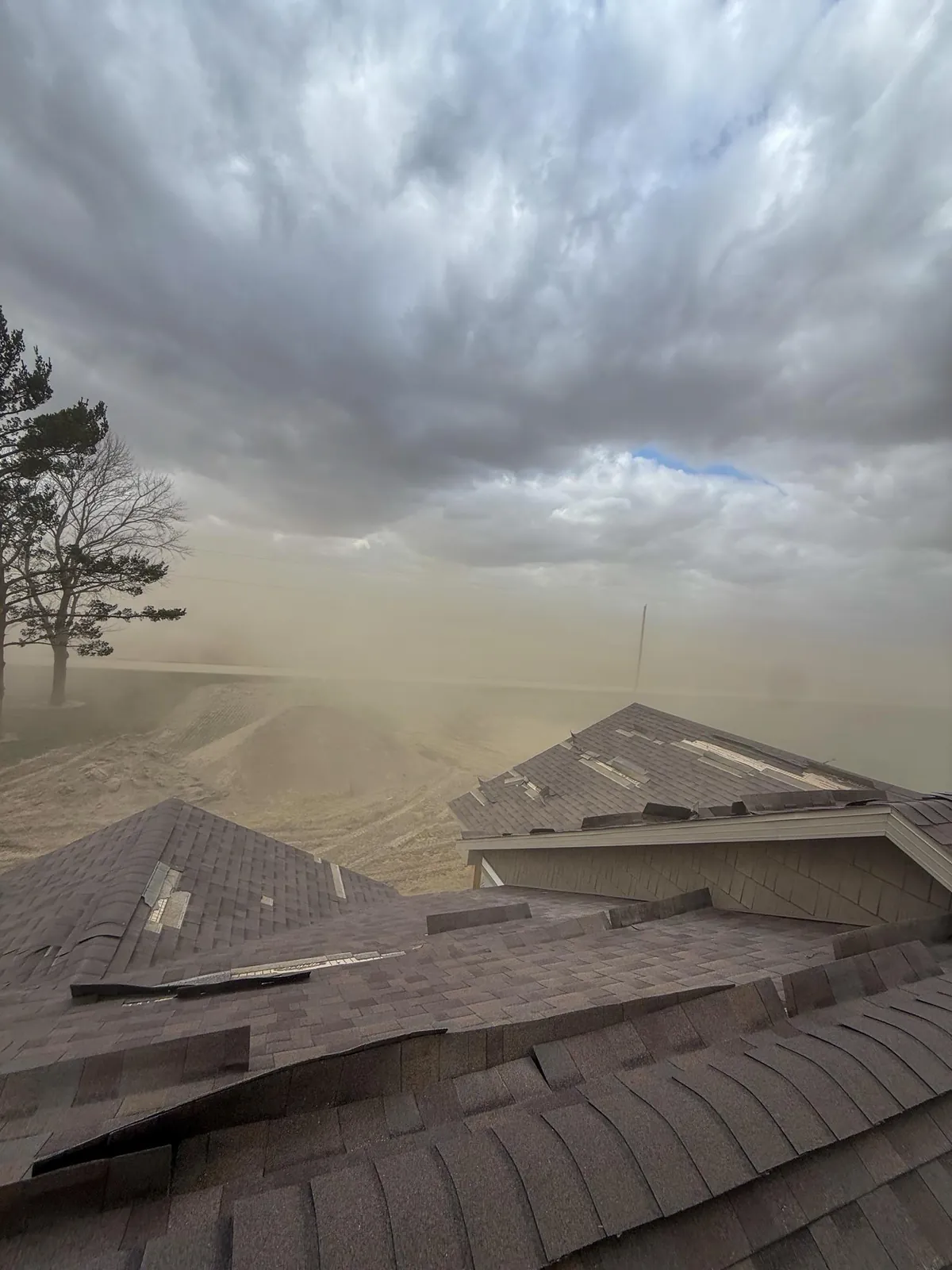
The clearest signs of storm damage are shingle pieces in the yard, missing or lifted shingles along the edges and ridge, dented gutters and vents, bent flashing, and new water stains on ceilings or in the attic. Check from the ground and from inside, stay off the roof, and photograph what you find with the date. Wind and hail damage that is too small to see from the yard, like creased shingles, broken seal strips, and hail bruises, needs an up-close roof inspection to find.
Where storm damage starts on a roof.
Wind does not push evenly across a roof. It pulls hardest at the edges: the eaves along the gutters, the rakes along the gable ends, the corners, and the ridge at the top. Those are the first places shingles lift, and the first places to look after a storm.
Each asphalt shingle is held down by nails and by a strip of sealant that bonds it to the shingle below once the roof warms up in the sun. When that seal holds, the roof acts like one sheet. When it breaks, the wind can get under each tab and work it loose. Older roofs are more at risk because the sealant dries out and gets brittle over the years, and hail can crack it too.
Direction matters. Thunderstorms in this part of Ohio usually move in from the west or southwest, so the slopes, walls, and gutters that faced the storm take most of the wind and hail. In open country between Defiance and Bowling Green, with nothing to slow the wind down across the fields, farmhouses and pole barns tend to catch it hardest on that side.

Signs you can see from the ground.
Wait until the storm has passed, then walk all four sides of the house. Stay off the roof and off ladders. A phone camera zoomed in, or a pair of binoculars, shows more than you would expect. Look for:
- Shingle pieces in the yard: whole tabs, torn strips, or ridge cap pieces in the grass, the flower beds, or the neighbor's yard downwind
- Missing shingles: a patch on the roof that is a different color, usually the underlayment or the old shingle edge showing through
- Lifted or flipped shingles: tabs standing up or folded back, most often along the eaves, the rakes, and the ridge
- Ridge cap damage: gaps or loose pieces along the peak of the roof
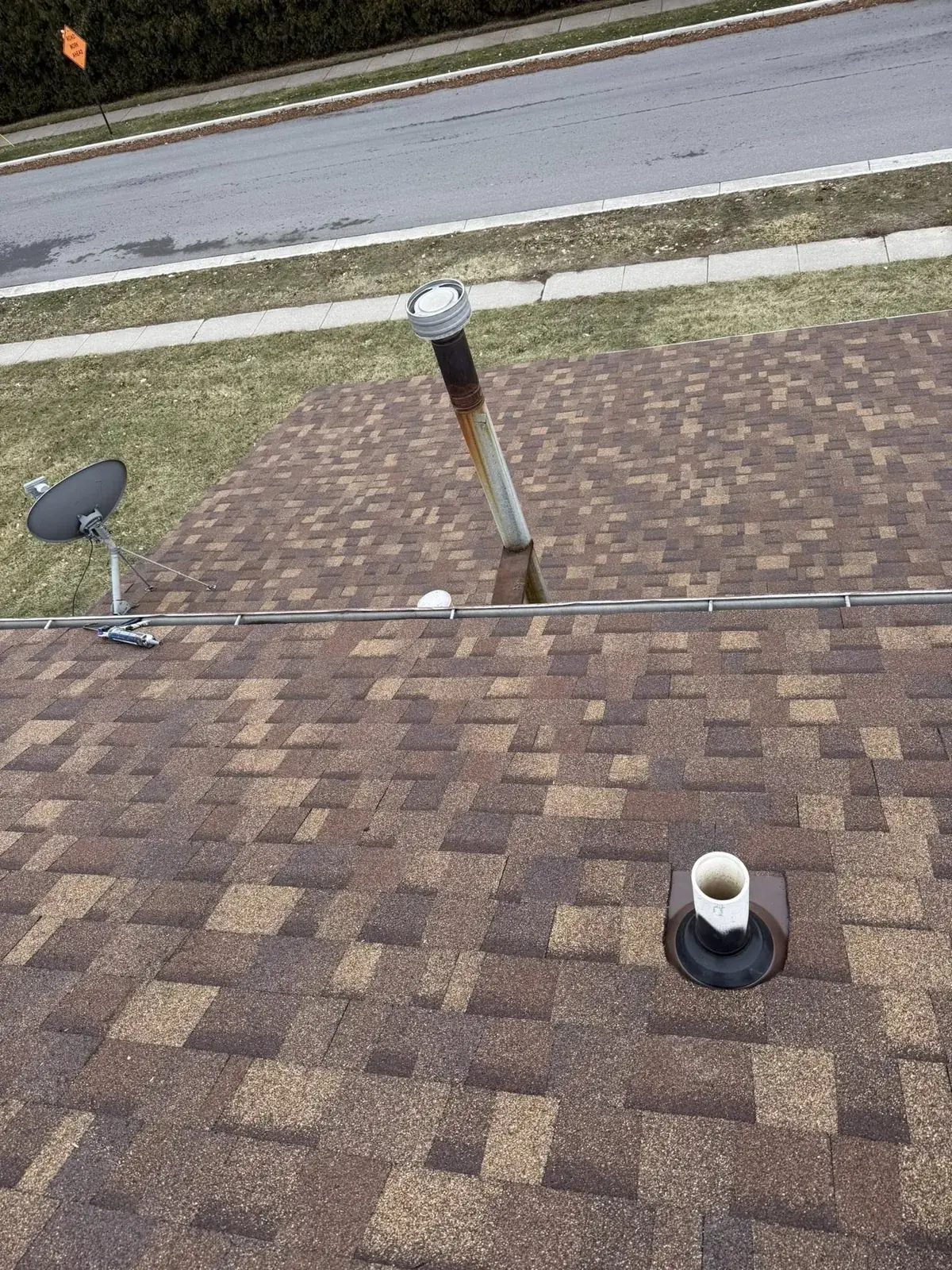
- Bent metal: drip edge pulled away from the roof edge, or flashing bent up at the chimney or along a wall
- Gutters and downspouts: dents, sections pulled away from the fascia, or downspouts knocked loose
- Soffit and siding: missing soffit panels under the eaves and missing or cracked siding on the side facing the storm
- Trees: broken limbs on the roof or on the ground near the house, and fresh breaks high in the trees that hang over the roof
- Granules: a fresh pile of dark, sandy granules at the bottom of the downspouts, which often comes with hail
If the storm brought hail, check the soft metal too: dented vent caps, gutters, window wraps, and the fins on the AC unit. Our hail damage roof checklist walks through hail in detail, from measuring the stones to the adjuster visit.
Wind damage you will not see from the yard.
A lot of wind damage looks fine from the driveway because the shingles settle back down once the wind stops. These are the problems a roofer finds by walking the roof.
Creased shingles
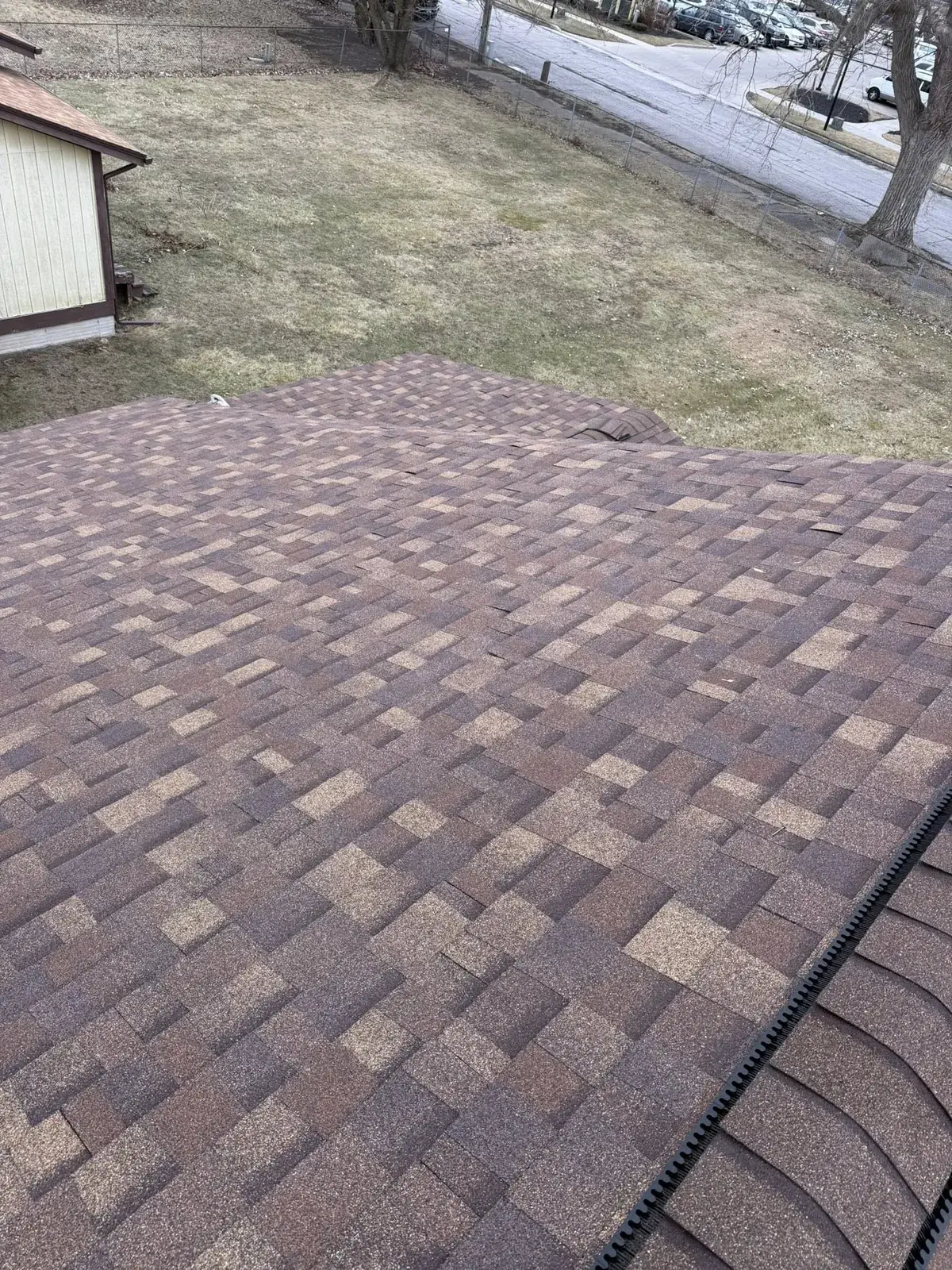
When wind lifts a tab and flaps it back and forth, the shingle bends along a straight line, usually near the nails. That leaves a horizontal crease across the shingle. The crease breaks the mat inside, and the shingle will tear off along that line in a later storm. Creasing is one of the most common wind damage findings, and it is the one homeowners almost never see from the ground.
Broken seal strips
A shingle can lose its bond to the shingle below without creasing or moving much. An unsealed shingle lifts easily by hand, and it will keep lifting in every wind until it blows off. Roofs where many shingles have come unsealed tend to lose shingles one storm after another.
Nails pulled up or exposed
Repeated lifting can work nails up out of the deck or leave nail heads uncovered. Exposed and backed-out nails are leak points, and they show up in the attic as rust or water marks around nail tips.
Flashing and pipe boots
Wind and flying debris can pull flashing loose at a chimney or wall and tear the rubber pipe boots around plumbing vents. Older chimneys on brick homes take it hardest, since the flashing there is often old and has been patched before.
Signs inside the house and attic.
Start on the top floor. Look at the ceilings, especially near outside walls, around light fixtures, and under any spot where the roof changes direction. A new brown or yellow stain, a bubble in the paint, or a drip means water is already getting in. Put a bucket under it and take a photo before you clean up.
If you can get into the attic safely, take a flashlight up and look at the underside of the roof deck. Step only on the framing. Look for:
- Daylight coming through anywhere it should not
- Wet or dark spots on the wood decking
- Fresh water stains running down the rafters
- Damp or matted insulation
- Rusty or wet nail tips poking through the deck
Many storm leaks do not show up until the next hard rain, so check the attic again after the next storm. A wet spot that appears a week later is just as much a part of the original damage.
What storm damage looks like on other roof types.
Metal roofs
Metal panels hold up well, and most storm problems on a metal roof are at the edges and fasteners. Look for panels lifted at the eaves or ends, bent ridge cap or trim, and loose or missing screws. On pole barns and outbuildings, a panel that rattles or flaps in the wind has usually pulled loose at the fasteners. Large hail can dent panels too. Our metal roofing page covers how these roofs are built and repaired.
Flat and low-slope roofs
On a flat roof, wind gets under the membrane at the edges. Look for edge metal pulled away, membrane that has lifted or bubbled up near the perimeter, and seams that have opened. After a storm, water that stays in one spot for days, or debris piled against a drain, is worth a look. Our guide to TPO vs EPDM flat roofs explains the two most common membranes.
Shingle roofs with tree damage
A large limb can break the decking under the shingles even if the shingles look intact from below. Smaller branches dragged across the roof by the wind scrape off granules and tear tabs. Do not climb up to move a limb yourself, and do not try to cut one that is resting on the roof or on a power line.
Not sure if the storm got your roof?
Free inspection with drone photos for homeowners in Napoleon and across NW Ohio. The photos are yours to keep.
Storm damage or normal wear.
Every roof wears out. The difference matters because homeowner insurance covers sudden damage from a storm, and generally not damage from age and wear. An adjuster will look at which one they are seeing.
Normal wear builds over years and spreads across the roof evenly:
- Granule loss across a whole slope, often worst on the side that gets the most sun
- Shingle edges curling or cupping all over the roof
- Small cracks spread evenly across older shingles
- Dark streaks, which are algae and not damage (see why shingles turn black)
Storm damage shows up all at once and follows the storm:
- Missing, torn, or creased shingles, mostly at the edges and ridge
- Fresh tears with clean edges and bright, unweathered asphalt showing
- Damage concentrated on the side of the house that faced the wind
- Dents and hits on gutters, vents, and siding from the same storm
Plenty of roofs have both. A 20-year-old roof that has been through two decades of freeze-thaw loses shingles in wind that a newer roof would ride out, and that storm damage is still storm damage. If the roof was already near the end, our guide to signs you need a new roof helps you judge whether repair still makes sense.
What to do once you find signs.
Take dated photos of everything you found: wide shots of each side of the house, close-ups of the damage, the debris in the yard, and any stains inside. Write down the date, the rough time, and what kind of storm it was. A screenshot of the weather alert helps tie the damage to that storm.
If water is coming in or part of the roof is open, call for an emergency tarp. We can get a tarp on it fast to keep water out of the house, and that tarp is typically covered by insurance as part of the claim.
Then get the roof inspected before you call your insurance company. Our free roof inspection takes 30 to 45 minutes. We climb the roof, check the attic where we can, and fly a drone over every slope, then walk you through the photos on the ground. You keep the photos whether you hire us or not. After a big storm, we will be on your roof within 48 hours.
If there is enough damage for a claim, our storm damage and insurance claim page covers how we handle it from filing to the adjuster visit. If the damage is small enough that a repair costs less than your deductible, we tell you that too. Our roof cost guide for NW Ohio covers typical repair and replacement ranges.
Older homes and storm chasers.
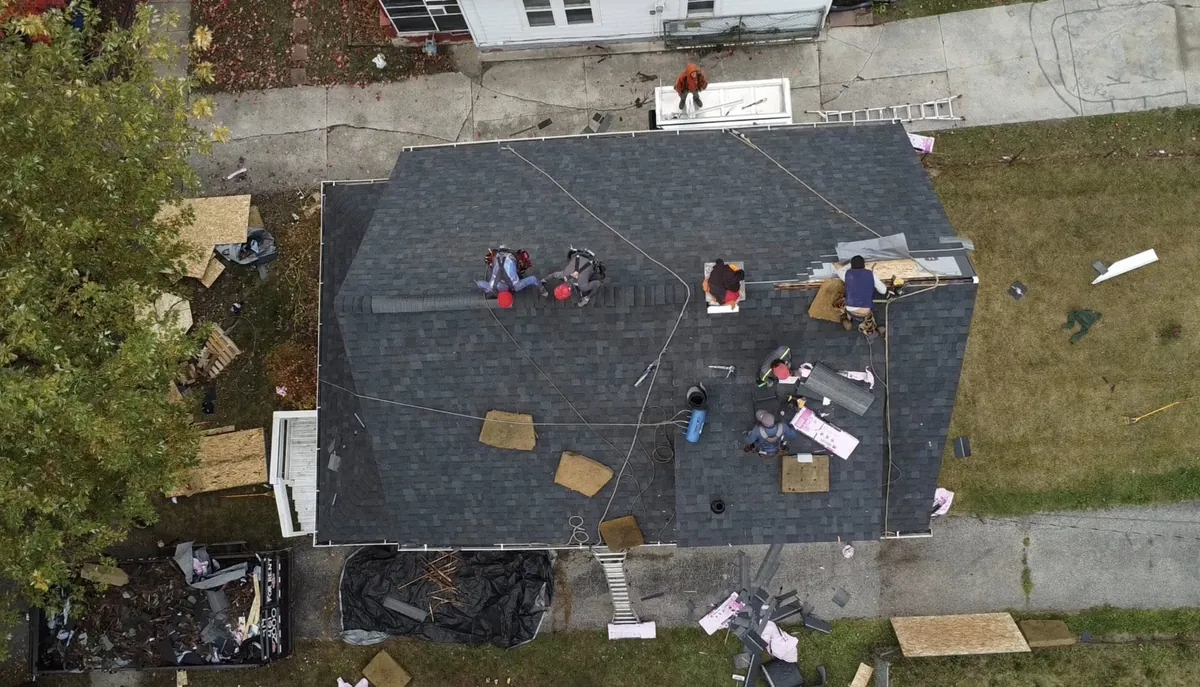
Older homes deserve a closer look after a windstorm. In Toledo neighborhoods full of older brick homes under big maples and oaks, storms bring down limbs, and older roofs with worn chimney flashing or more than one layer of shingles lose material faster than a newer roof in a subdivision.
After big storms, out-of-state crews knock on doors across Henry County, Wood County, and the Toledo suburbs. Do not sign anything at the door, including a form that only "authorizes an inspection," and do not let anyone on your roof until you have your own photos. Be wary of anyone who offers to waive or cover your deductible. In Ohio that is insurance fraud, and it puts you on the hook, not them.
Storm damage: common questions.
The most common signs are missing shingles, shingles lifted or flipped back at the edges and ridge, and creased shingles with a straight horizontal line across the tab where the wind folded them back. You may also see loose ridge caps, bent drip edge or flashing, and shingle pieces in the yard. Creased and unsealed shingles often lie flat again after the storm, so they are hard to spot from the ground.
There is no single number. A roof in good shape with well-sealed shingles handles most ordinary gusts. The National Weather Service calls a thunderstorm severe when it brings gusts of 58 mph or more, and storms like that can lift shingles at the edges, the ridge, and on older roofs where the seal strips have dried out. Shingles that never sealed, or were already loose, can blow off in weaker wind.
Yes. Creased shingles, broken seal strips, and hail bruises usually do not leak right away. They weaken the roof so it leaks or loses shingles in a later storm. That is why it is worth checking the attic again after the next heavy rain and getting the roof looked at up close after a bad storm.
Wear shows up evenly across the roof over years: granule loss, curling, and cracking spread over a whole slope. Storm damage shows up all at once and follows the storm: torn or missing shingles at the edges and ridge, creases, fresh tears with clean edges, and hits concentrated on the side that faced the wind. Insurance covers sudden storm damage and generally not wear, so that difference matters if you file.
Not after every rain shower. It is worth an inspection after a storm with a severe thunderstorm warning, hail, a strong winter windstorm, or a limb on the roof, and any time you find shingle pieces in the yard or a new stain on a ceiling. Big Horn Roofing does free roof inspections across Northwest Ohio, so checking costs you nothing.

Get your free storm damage inspection.
We come out, fly the drone, take photos, and walk you through what we found. No pressure, no sales pitch.