
Ice and Water Shield: What It Is and Where It Goes on an Ohio Roof
The layer under your shingles that stops ice dam leaks.
Ice and water shield is one of the parts of a roof you never see once the shingles are on, and one of the first things a low bid quietly leaves out. This guide covers what the membrane is, where it belongs on a Northwest Ohio roof, how it works with the rest of the system, and what to check for on a quote.
Call (419) 799-7778Last updated: November 2, 2026
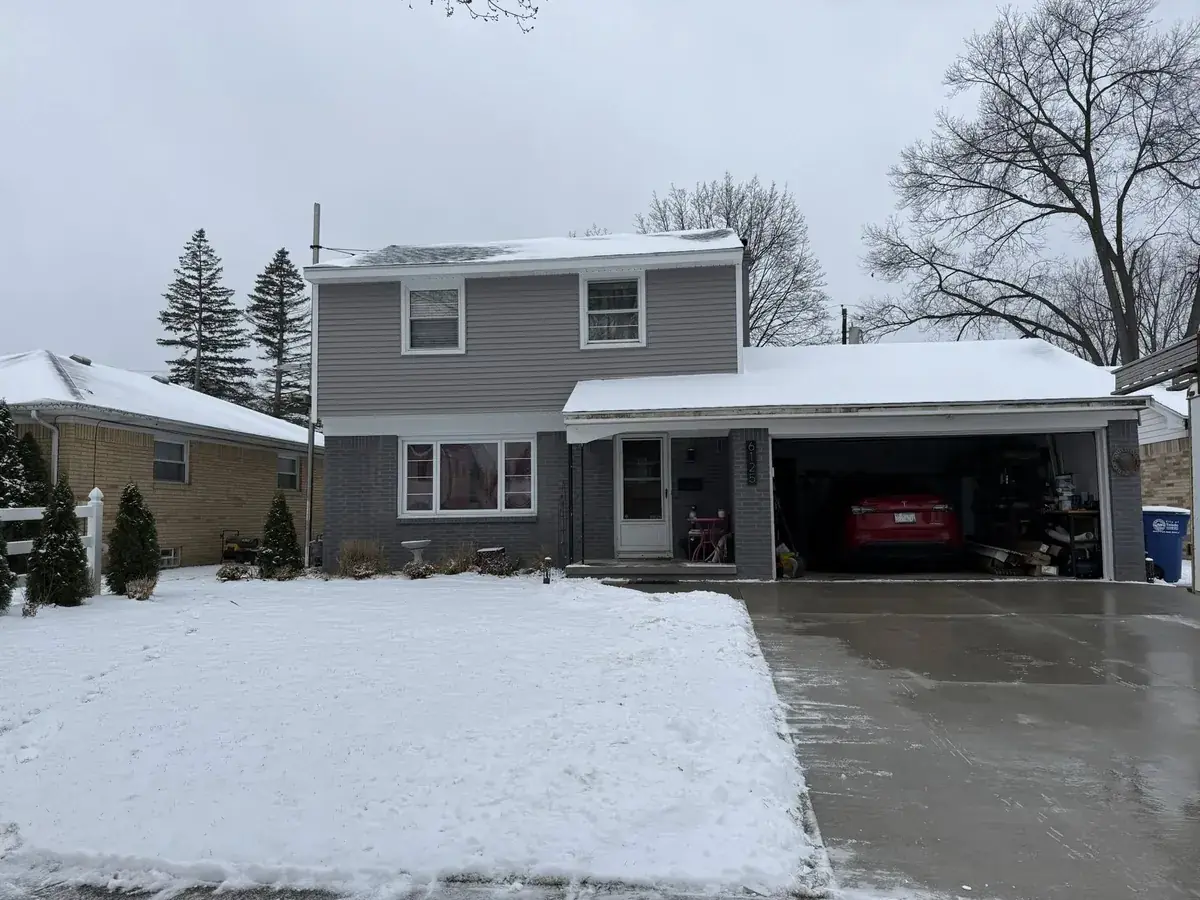
Ice and water shield is a self-adhering rubberized membrane that sticks directly to the roof deck under the shingles and seals around every nail driven through it. On an Ohio roof it belongs at the eaves, where ice dams back water up under the shingles, and in the valleys, where the most water runs. Regular underlayment covers the rest of the deck. We install ice and water shield at every eave and valley on every roof, not just where code requires it.
What ice and water shield is.
Ice and water shield is a sheet of rubberized asphalt with a sticky back and a textured top surface, sold in rolls. The installer peels off the release film and presses it straight onto the bare wood deck, where it bonds to the plywood. Shingles or metal panels then go on over it.
Two things set it apart from regular underlayment:
- It is waterproof, not just water resistant. Standing water on top of it does not get through.
- It seals around nails. When a roofing nail goes through the membrane, the rubberized asphalt grips the shank and closes the hole, so the nail does not become a path for water.
Regular underlayment, synthetic or felt, is fastened to the deck and laps over itself like the shingles do. It sheds water that runs downhill, which is all it has to do on most of the roof. What it cannot do is hold back water that is pooled and pushing uphill, and that is exactly what happens at the eaves in a Northwest Ohio winter.

Why Northwest Ohio roofs need it.
Our winters pile heavy, wet snow on roofs and then swing above and below freezing over and over. Heat escaping from the house melts the snow on the upper part of the roof. That water runs down to the eaves, which hang out past the warm walls and stay cold, and it refreezes into a ridge of ice. The next round of meltwater pools behind that ridge with nowhere to go.
Shingles are built to shed water running downhill. Pooled water behind an ice dam sits against them and works its way up under the tabs, past the nails, and onto the deck. Without a waterproof layer underneath, it ends up in the soffit, the top of the wall, or the ceiling below. Stained ceilings along an outside wall in February are the classic sign. Our guide to ice dams in Ohio covers why they form and how to stop them at the source.
Ice dams are not the only reason. Spring wind drives rain sideways into valleys and up under shingle edges, and valleys carry the water from two roof planes at once. Older homes with limited attic insulation lose more heat through the roof, so they build bigger dams. That is a big part of why we strip older roofs back to the deck and rebuild the system with ice and water shield instead of layering over them.
Where it goes on the roof.
Eaves
The eaves are the most important spot. The membrane starts at the bottom edge of the roof and runs up the slope far enough to reach past the line of the exterior wall, so it covers the cold overhang where ice forms and continues onto the part of the roof that sits over the heated house. That is where backed-up water does its damage. On a low-pitched roof or a house with a deep overhang, that takes more than one course of membrane.
Valleys
Valleys collect water from two slopes and funnel it down one line, and in winter they fill with snow and ice that melts slowly. A full-width strip of ice and water shield down the center of every valley gives that water nowhere to go but down.
Other spots roofers commonly cover
- Around chimneys, where the flashing meets the brick
- Around skylights
- Along sidewalls, where a roof runs into a wall of the house or a dormer
- Low-slope sections, such as a porch roof or a shallow addition, where water drains slowly
- Roof-to-roof transitions where the pitch changes
On every residential roof we put on, ice and water shield goes at every eave and every valley as standard, along with full-coverage synthetic underlayment over the rest of the deck. You can see the full list of what comes with a new roof on our residential roofing page.
How it works with the rest of the roof.
Ice and water shield is one layer in a system. It does its job only when the parts around it are done right too.
- Underlayment: synthetic underlayment covers the deck above the ice and water shield and laps over it, so water running down the roof stays on top of each layer.
- Drip edge: metal drip edge at the eaves and rakes carries water off the edge of the roof and into the gutter instead of letting it wick back onto the fascia. We put new drip edge on all sides of every residential roof.
- Flashing: the membrane sits under the step flashing and pipe boots at walls and penetrations. It backs up the flashing. It does not replace it.
- Ventilation: balanced intake and exhaust keep the roof deck cold in winter, which means less snowmelt and smaller ice dams to begin with. Our attic ventilation guide explains how that works.
The membrane protects the house from water that backs up behind an ice dam. Ventilation and attic insulation are what keep the dam from forming. A roof needs both.
Should the whole roof get ice and water shield?
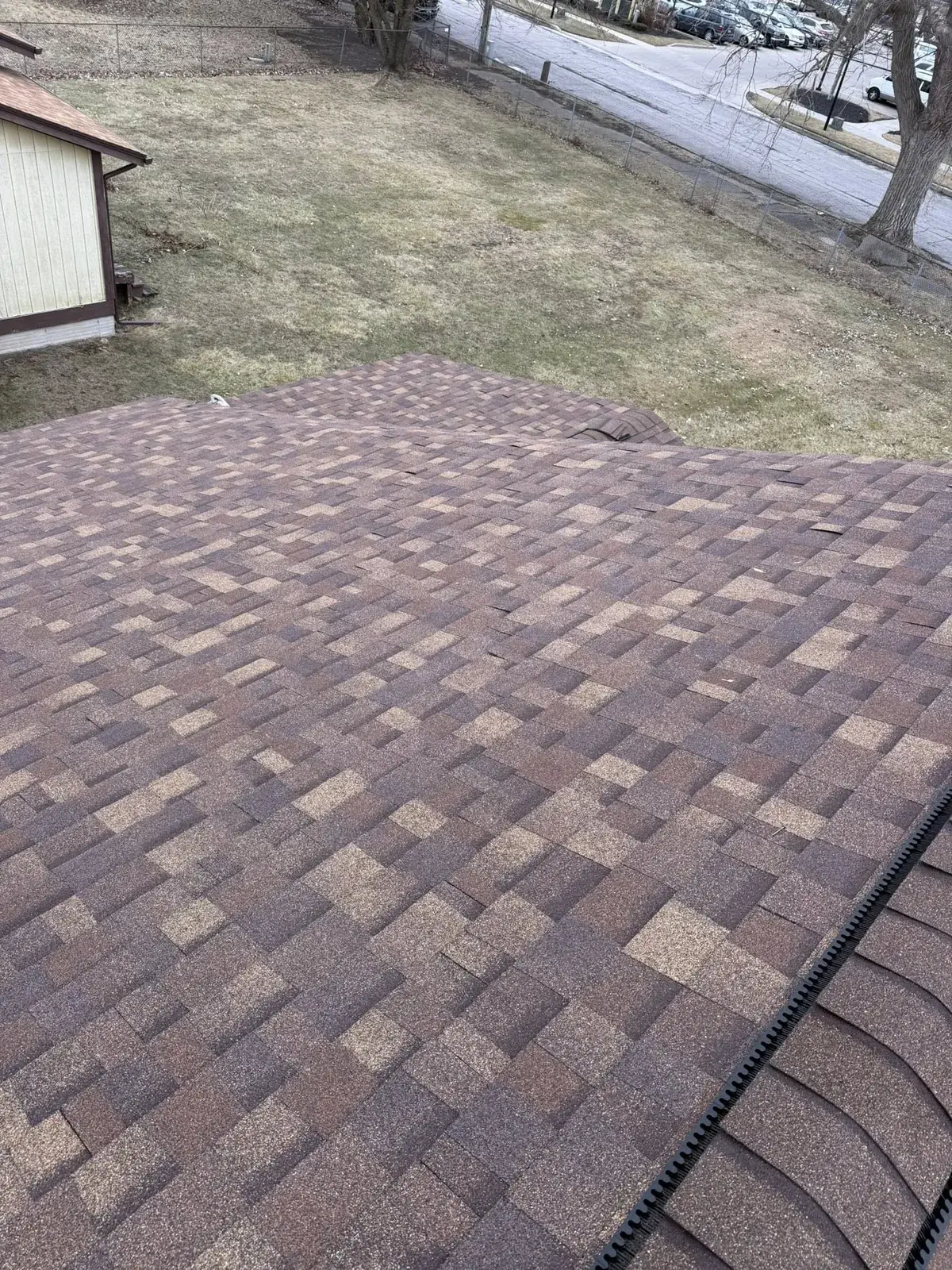
On a normal steep-slope house roof, usually not. The membrane is a vapor barrier as well as a water barrier. Synthetic underlayment lets some moisture from the attic side pass through, while ice and water shield traps it. Covering an entire deck with it means any moisture that gets into the wood from the attic has a harder time drying out, and that puts even more weight on good ventilation.
It also costs more per roll than underlayment, so covering the whole roof adds real material cost to a job without solving a problem the roof actually has. The better approach is putting the membrane where water pools or concentrates (eaves, valleys, walls, penetrations, low-slope sections) and using a quality underlayment everywhere else.
Low-slope roofs are the exception. A roof too flat for shingles to shed water well is a different kind of roof, and it usually calls for a membrane system built for low slope instead of shingles. Our TPO vs EPDM guide covers those.
Getting leaks along an outside wall every winter?
Free inspection for homeowners in Napoleon and NW Ohio. We will tell you what is causing it and what fixes it.
Ice and water shield under a metal roof.
A metal roof sheds snow better than shingles, but the eaves and valleys still need protection, especially on a house where snow guards hold snow in place over a doorway or walkway. On every metal roof we install, ice and water shield goes at the eaves and valleys, with high-temp synthetic underlayment over the rest of the deck.
Heat is the reason for the high-temp rating. Metal panels get much hotter in the summer sun than shingles do, and that heat passes down into whatever is underneath. Membranes and underlayments rated for high temperatures are made so they do not soften, slide, or get gummy under metal. Our metal roofing page lists everything that comes with a metal install, and our metal vs shingle comparison covers how each roof handles snow and ice.
Older homes usually do not have it.
Many roofs on older houses went on before ice and water shield was standard practice, and a lot of them have had second and third layers of shingles added over the decades without anyone touching the deck. The older brick homes in Toledo and the neighborhoods around the courthouses in Napoleon and Defiance are a good example. Those homes also tend to have steeper pitches, dormers, older flashing, and less attic insulation, which adds up to bigger ice dams and more places for water to get in.
Ice and water shield bonds to bare wood, so it cannot go on over old shingles. The way to add it is a full tear-off to the deck, which also lets us inspect the plywood and replace any that has rotted from years of slow leaks at the eaves. If a home is getting ice dam leaks and the roof still has years left, it is worth having it inspected to see whether a repair or better ventilation will hold it over until replacement.

What to check for on a roofing quote.
Two quotes on the same house can look very different because they do not include the same work. A low number sometimes skips a full tear-off, uses thinner underlayment, or leaves out ice and water shield, drip edge, or new flashing. Once the shingles are on, there is no way to tell from the ground what is underneath them. These are the questions worth asking every contractor:
- Is ice and water shield included, and is it written on the quote?
- Does it go at every eave and every valley, or only some of them?
- How far up the roof from the eave does it run on my house?
- Is it going around the chimney, skylights, and any walls the roof runs into?
- What underlayment covers the rest of the deck?
- Is the old roof being torn off to the deck, or is this a layover?
- Is new drip edge included on all sides?
Compare what is actually in each quote, not just the total at the bottom. Our NW Ohio roof cost guide goes through what is included in a typical replacement and what changes the price.
On an insurance claim
When a roof is replaced after storm damage, adjusters sometimes leave code-required items like ice and water shield or proper ventilation off the approved scope. When that happens, we file a supplement with photos and documentation to get it added. Our storm damage and insurance page explains how the claim process works.
Ice and water shield: common questions.
Yes. Northwest Ohio gets heavy, wet snow and a lot of freeze-thaw cycles, which is exactly what causes ice dams at the eaves. Ice and water shield is the waterproof layer that keeps water backed up behind an ice dam from getting through the deck and into the house. We install it at every eave and valley on every roof, not just where code requires it.
No. Underlayment, synthetic or felt, is water resistant and covers the whole deck under the shingles. Ice and water shield is a self-adhering waterproof membrane that sticks to the deck and seals around nails. It goes in the spots where water pools or concentrates, mainly the eaves and valleys, and underlayment covers the rest.
On a normal steep-slope house roof, it is usually not the best choice. The membrane is a vapor barrier, so covering the whole deck can trap moisture coming up from the attic and puts more pressure on ventilation. It also adds material cost. Putting it at the eaves, valleys, walls, and penetrations, with quality synthetic underlayment over the rest, protects the spots that actually take on water.
Not over existing shingles. The membrane has to bond to the bare roof deck, so it goes on during a tear-off. If your roof is getting ice dam leaks and still has years left, an inspection can show whether a repair, better ventilation, or more attic insulation will stop the problem until it is time for a new roof.
When a roof is replaced on a claim, code-required items like ice and water shield should be part of the scope. Adjusters sometimes leave them off. When the approved scope misses them, we file a supplement with photos and documentation to get them added.

Get a roof built to handle an Ohio winter.
We come out, look at your roof and attic, and tell you what it needs to stop ice dam leaks. No pressure, no sales pitch.