
Roof Underlayment: Synthetic vs Felt on an Ohio Roof
The layer between your shingles and the roof deck.
Underlayment covers every square foot of the roof deck, and once the shingles are on, nobody sees it again until the next tear-off. This guide covers what underlayment does, how synthetic and felt compare in a Northwest Ohio climate, where ice and water shield fits in, what goes under a metal roof, and what to look for on a roofing quote.
Call (419) 799-7778Last updated: November 5, 2026
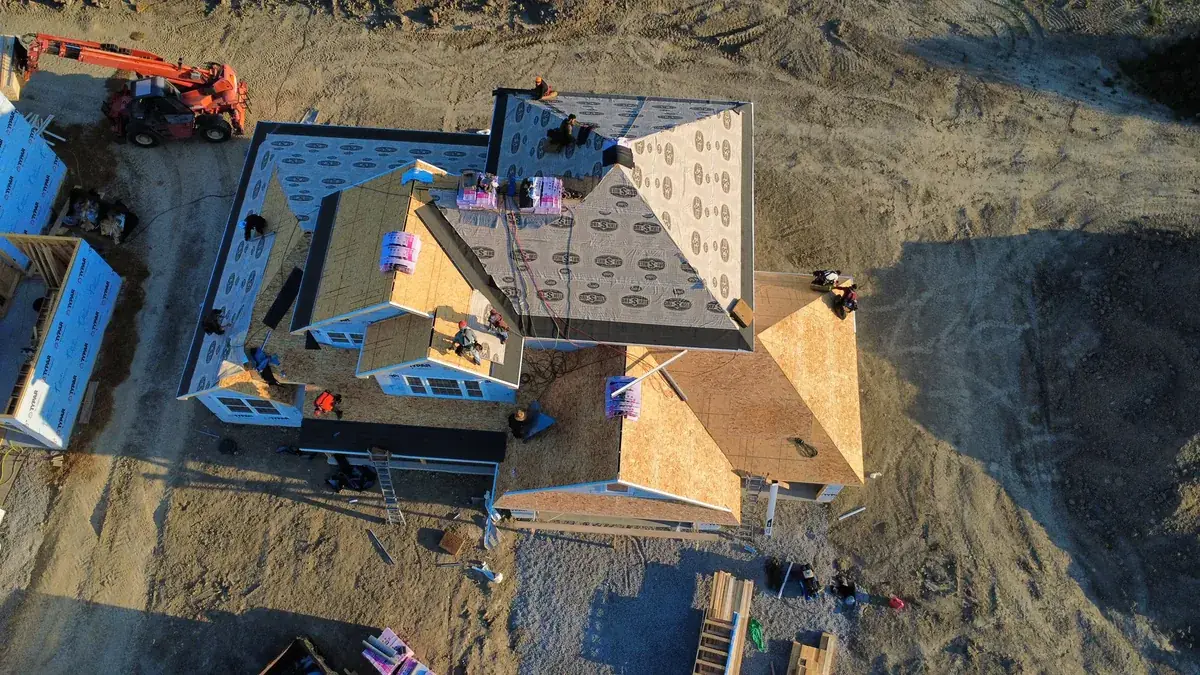
Roof underlayment is the water-resistant layer that covers the whole roof deck under the shingles or metal. It catches water that gets past the roofing from wind-driven rain, a lifted shingle, or ice. Synthetic underlayment is lighter, tougher, and lies flatter than felt, and it handles wet weather during installation much better, which is why it has largely replaced felt. We put full-coverage synthetic underlayment on every residential roof, with ice and water shield at the eaves and valleys.
What underlayment does.
A roof is built in layers. The wood deck (plywood or OSB on most homes, boards on many older ones) is nailed to the rafters. Underlayment goes on over the deck. Shingles or metal panels go on top of that. The shingles do most of the work of shedding water, but they overlap and are nailed down, so they are never a sealed surface.
Underlayment is the backup. It handles the water that gets past the shingles:
- Wind-driven rain. Strong spring storms push rain sideways and up under shingle edges.
- Damaged or missing shingles. When wind tears off a few tabs, the underlayment is what keeps the deck dry until the repair.
- Meltwater and ice. Snow that melts and refreezes works its way under shingles at the eaves and in valleys.
- The installation itself. Once the old roof is torn off, underlayment is what protects the deck and the house from a passing shower before the shingles are on.
Underlayment is laid in rows from the bottom of the roof up, each row lapping over the one below, the same way shingles do. Water that reaches it runs down across the laps and off the roof. That makes it water resistant, which is different from waterproof. It sheds water flowing downhill, but water that pools and sits against it can find the nail holes and seams. That is the job of ice and water shield, covered below.
It also keeps the shingles from sitting directly on bare wood, gives the crew a cleaner surface to lay out and nail the shingles, and helps the finished roof lie flat.

The three kinds of underlayment.
Felt
Felt is the traditional option: a paper or fiberglass mat soaked in asphalt, sold in rolls and usually called by weight, such as 15 lb or 30 lb felt. The heavier felt is thicker and holds up better. It is what you find under most older roofs in Northwest Ohio, including the builder-grade roofs from the 1990s and early 2000s that are coming due for replacement now.
Synthetic
Synthetic underlayment is a woven or spun plastic sheet, usually polypropylene or polyethylene, with a coating that sheds water and a textured surface for footing. It comes in larger, lighter rolls than felt and is fastened with cap nails. On new roofs today, synthetic is the most common choice.
Self-adhered membrane (ice and water shield)
This is a rubberized asphalt sheet with a sticky back that bonds directly to the deck and seals around nails. It is waterproof, and it goes in the specific spots where water pools or concentrates. Our ice and water shield guide covers it in detail. Most roofs use it in combination with felt or synthetic, which covers everything else.
Synthetic vs felt, point by point.
Both products do the same basic job when installed correctly. The differences show up during installation and in how much abuse each one takes.
- Tear resistance. Felt tears when it is walked on, especially in summer heat, and it can blow loose in wind if the shingles do not go on right away. Synthetic is much harder to rip, so it stays intact through the tear-off, the shingle install, and a windy afternoon.
- Getting wet. Felt absorbs moisture. When it gets rained on, it can wrinkle and buckle, and those wrinkles can telegraph through the shingles as ridges. Synthetic does not absorb water, so it stays flat.
- Sun exposure. Felt breaks down faster when left uncovered. Synthetic products are made to sit exposed to sun and rain for longer before the roofing goes on. How long depends on the product, and the manufacturer lists it on the label.
- Footing. Most synthetics have a textured surface that gives the crew better grip on a steep roof. Felt can get slick, especially with frost or dew on it.
- Weight and coverage. A roll of synthetic covers more roof and weighs less than a roll of felt, so there are fewer seams and less material to carry up the ladder.
- Moisture from the attic. Felt lets some water vapor pass through. Many synthetics let through much less, and some are made to breathe more than others. On a roof with poor attic ventilation, that matters. Under any underlayment, the attic still needs balanced intake and exhaust so moisture does not collect under the deck. Our attic ventilation guide explains how that works.
- Cost. Felt costs less per roll. On a full replacement, the difference in underlayment cost is a small part of the total job.
For a Northwest Ohio roof, the case for synthetic comes down to the weather during installation and the years after. A tear-off leaves the deck exposed, and our spring and fall weather can turn from clear to rain in an afternoon. Synthetic keeps the deck dry and flat through that. Once the roof is done, it stays intact under freeze-thaw cycles, when water that gets under a lifted shingle freezes overnight and works deeper into the roof the next warm day. That is why full-coverage synthetic underlayment is standard on every residential roof we install, not an upgrade.
How underlayment works with ice and water shield.
On an Ohio roof, the eaves and valleys take the most punishment. Heavy, wet snow melts on the upper roof, runs down to the cold overhang, and refreezes into an ice dam. Water pools behind it and backs up under the shingles. Valleys carry water from two roof slopes at once and fill with snow and ice that melts slowly. Underlayment that only sheds water is not enough in those spots.
So the two products split the roof:
- Ice and water shield goes on first, along the eaves and down the center of every valley, bonded to the deck. Roofers also commonly use it around chimneys, skylights, and walls the roof runs into.
- Synthetic underlayment covers the rest of the deck, starting above the ice and water shield and lapping over it, so water running down the roof always crosses from one layer onto the top of the next.
- Drip edge finishes the edges. The usual practice is for the underlayment to lap over the drip edge at the eaves and to sit under it along the rakes, so water runs off the metal instead of behind it.
- Flashing and pipe boots go over the underlayment at walls, chimneys, and vents, and seal the spots where something passes through the roof.
Each layer depends on the one beside it. A good underlayment does not help much if the valleys have no membrane, and a membrane at the eaves does not help if the flashing around a chimney is failing. Our guide to ice dams in Ohio covers why the eaves need the extra protection.
Not sure what is under your roof right now?
Free inspection for homeowners in Napoleon and NW Ohio. We will check the roof and attic and show you what we find.
Underlayment under a metal roof.
Metal panels get much hotter in summer sun than shingles do, and that heat passes straight down into the underlayment. Standard felt and some standard synthetics can soften, get sticky, or break down under that heat. Underlayments rated for high temperatures are made for it.
On every metal roof we install, the deck gets high-temp synthetic underlayment with full coverage, plus ice and water shield at the eaves and valleys. The underlayment also plays a part in noise. On a house with solid decking, synthetic underlayment, and normal attic insulation, a metal roof sounds about the same as shingles in the rain. The loud tin-roof sound people remember comes from panels fastened over open purlins with nothing underneath, the way many pole barns are built.
Our metal roofing page lists everything that goes into a metal install, and our metal vs shingle comparison covers how the two roofs compare in a Northwest Ohio winter.
What we find under older roofs.
A tear-off is the only time anyone gets to see the underlayment and the deck, and older homes around here have a wide range of what is under the shingles. The older brick homes in Toledo and the neighborhoods around the courthouses in Napoleon and Defiance often have board decking from when they were built, with two or three layers of shingles added over the years without anyone touching what was underneath. Newer subdivisions from the 1990s and early 2000s often have builder-grade shingles over thin underlayment.
Common problems we see once the old roof is off:
- Felt that has dried out, cracked, or rotted away where water has been getting past the shingles for years
- Dark, stained, or soft deck boards near the eaves, valleys, and chimneys where leaks have been slowly soaking the wood
- Gaps between old deck boards that new shingles cannot be nailed into securely
- Wrinkled felt that was laid down wet, sometimes showing through the old shingles as ridges
Because underlayment sits directly on the deck, it can only be replaced by tearing the roof off. That is why every roof we put on starts with a full tear-off to the deck. We inspect the wood, replace rotted plywood, and then rebuild the roof with ice and water shield and synthetic underlayment. Laying new shingles over the old ones leaves the old underlayment, and whatever it is hiding, in place.
What to check for on a roofing quote.
Underlayment is one of the easiest places to cut cost on a roof, because no one sees it once the shingles are on. Two quotes on the same house can look very different because they do not include the same work, and a low number sometimes uses thinner underlayment or skips ice and water shield, drip edge, or a full tear-off. These questions are worth asking every contractor:
- What underlayment is going on the deck, synthetic or felt, and is it written on the quote?
- Does it cover the whole deck?
- Is ice and water shield included at every eave and every valley?
- For a metal roof, is the underlayment rated for high temperatures?
- Is the old roof being torn off to the deck, or is this a layover?
- How are rotted deck boards handled if the crew finds them during the tear-off?
Our NW Ohio roof cost guide lists what comes with a typical replacement and what changes the price.
When the roof leaks but is not ready for replacement
A leak in one spot does not always mean the underlayment has failed across the roof. A cracked pipe boot, a few missing shingles after a windstorm, or a valley that leaks in heavy rain can often be fixed in place. If the roof is under 15 years old and the deck is still solid, a roof repair is usually the right call. If the shingles are curling everywhere and the deck is soft, replacement makes more sense than patching.
Roof underlayment: common questions.
Underlayment is the water-resistant layer that covers the roof deck under the shingles or metal panels. Shingles shed most of the water, and underlayment catches what gets past them from wind-driven rain, a lifted or missing shingle, or ice. It also protects the deck during installation and helps the roof lie flat.
For most Northwest Ohio roofs, yes. Synthetic underlayment is lighter, much harder to tear, does not wrinkle when it gets wet, gives the crew better footing, and holds up longer if it is exposed to weather before the shingles go on. Felt still works when it is installed well, but it tears and wrinkles more easily. We use full-coverage synthetic underlayment on every residential roof.
No. Underlayment covers the whole deck and is water resistant: it sheds water running downhill. Ice and water shield is a self-adhering waterproof membrane that bonds to the deck and seals around nails. It goes at the eaves and valleys, where water pools or concentrates, and underlayment covers the rest of the roof.
No. Underlayment sits directly on the deck under the shingles, so the only way to replace it is to tear the roof off. A leak in one spot can often be repaired by lifting or removing the shingles in that area. If the underlayment has failed across the roof, that is usually a sign the whole roof is near the end of its life.
Metal panels get much hotter in summer sun than shingles, so the underlayment under them needs to handle that heat without softening or sticking. On every metal roof we install, we use high-temp synthetic underlayment with full coverage, plus ice and water shield at the eaves and valleys.

Know what is going under your new roof.
We come out, look at your roof and attic, and walk you through every layer that goes into the quote. No pressure, no sales pitch.